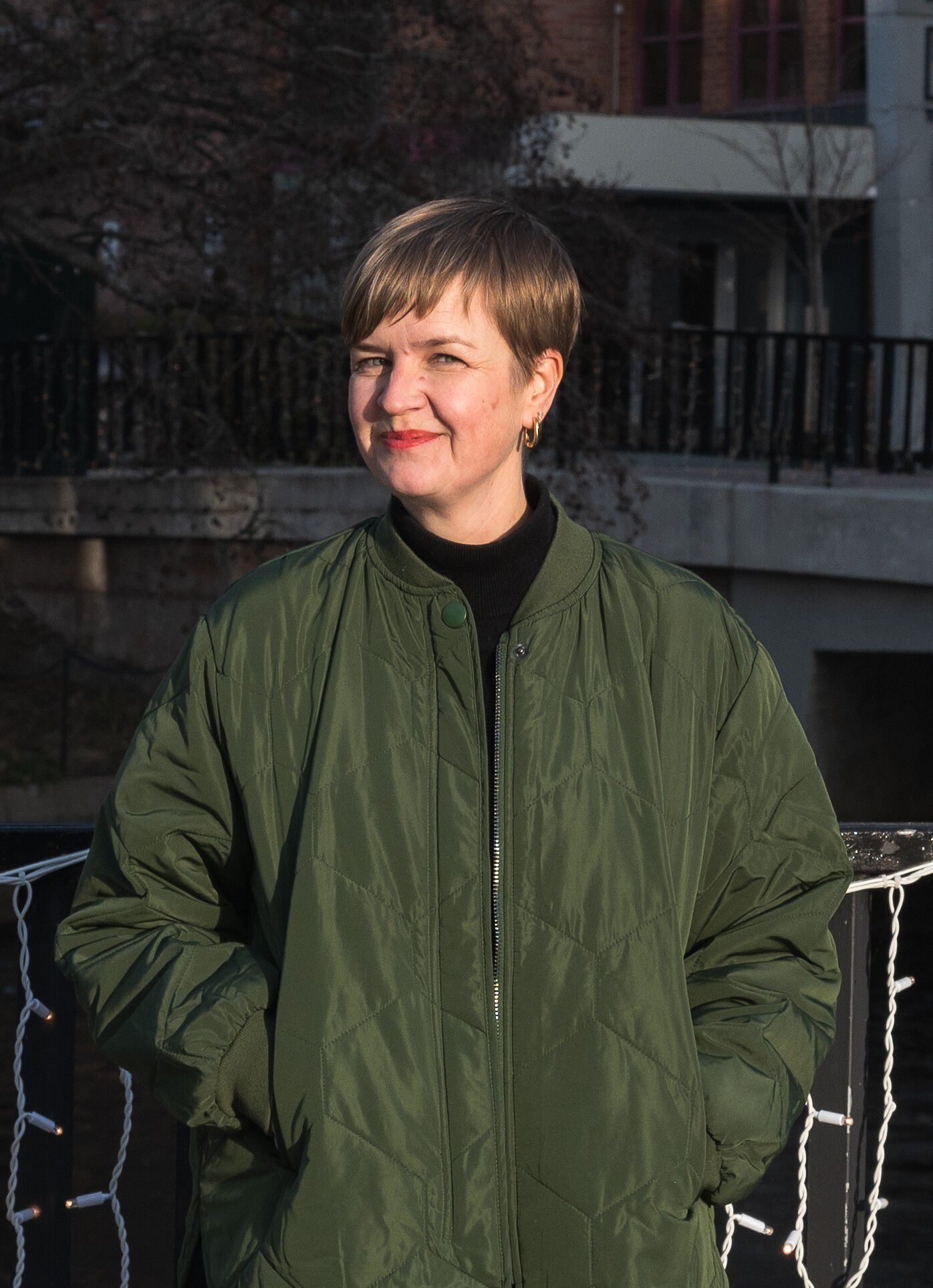
- Trial lecture starts at 10 am
- Public defence starts at 12 noon
Title of trial lecture:
Within a cultural ecosystem, what can young people learn about theatre through performative criticism, and what can theatre studies and theatre criticism learn from young people’s critiques?
Read the thesis in the Norwegian Research Information Repository
Disputation chair: Vice Dean, Professor Anne Haugland Balsnes
Assessment committee:
- Committee Chair Anna Blekastad Watson, Associate Professor, Department of Visual Art & Drama, University of Agder
- Opponent Pernille Welent Sørensen, Senior Lecturer, Pedagogical Education Centre, Roskilde, Denamark
- Opponent Rikard Loman, Lecturer in Drama, Lund University, Sweden
Supervisors for the doctoral project:
- Professor Siemke Böhnisch
- Professor Kristian Nødtvedt Knudsen
- Head of Department Ragnhild Tronstad
Summary of thesis
In this research project I have developed a workshop model for art criticism aimed at youth who have been exposed to performing arts programming through the Norwegian state's national programme for production and dissemination of the arts in primary and secondary schools, The Cultural Schoolbag (DKS). The research is founded upon theory as well as my own practice as a performing arts critic. The main objective of the project has been to investigate a performative and affective approach to critical practice with youth who have been exposed to performing arts programming through DKS
In the project I see criticism as a way to enter a dialogue with the arts, and I have wished to include both what happens on stage, in the room as well as in the phantasy, to be part of the critical response. Criticism is therefore in this project defined as a response. In order to explore formats and methods for criticism – meaning; ways of being in dialogue with the arts – I have included the social part of the performance experience in my workshops. The participants have been invited to respond to prompts through physical movement, sensory choices, drawing, and text.
The research has been led by a question about how workshops on criticism in DKS can be shaped in order to allow for the autonomous and spontaneous reactions from youths who experience art. During the research period I have designed a workshop model that has been carried out in connection with three different dance and theatre performances in DKS.
The dissertation is scientific and article-based, and consists of a meta-analysis, three articles, and a scientific essay. The essay provides an overview of already existing projects of criticism for children and youth. The first article was written while the workshop model was still under development and formulates a statement on the theoretical foundation for this model of criticism. The two following articles deliver analysis of various selections of empirical data collected during the workshops. In the second article I present the workshop model and perform an analysis of affective impressions found in the data. The third article examines the postcard as a format and method for criticism. In this article, I am particularly interested in the intersections between affective spectatorship and creative criticism.
The dissertation combines theory from the fields of art criticism, performative writing and affect/affective spectatorship to explore how social, affective, and artistic aspects of a performing arts experience can be expressed through criticism within a context such as DKS.
What to do as an online audience member
The disputation is open to the public. To follow the trial lecture and the public defence online, register on Zoom.
https://uiano.zoom.us/j/68154023109?pwd=ACbTDgcnWNpHyaLZ9esc66vrzGbiph.1
We ask online audience members to join no earlier than 10 minutes in advance. After these times, you can leave and rejoin the meeting at any time.
Opponent ex auditorio:
Deadline for the public to pose questions is during the break between the two opponents. Questions ex auditorio can be submitted to disputation chair Dean Marit Wergeland marit.wergeland@uia.no .