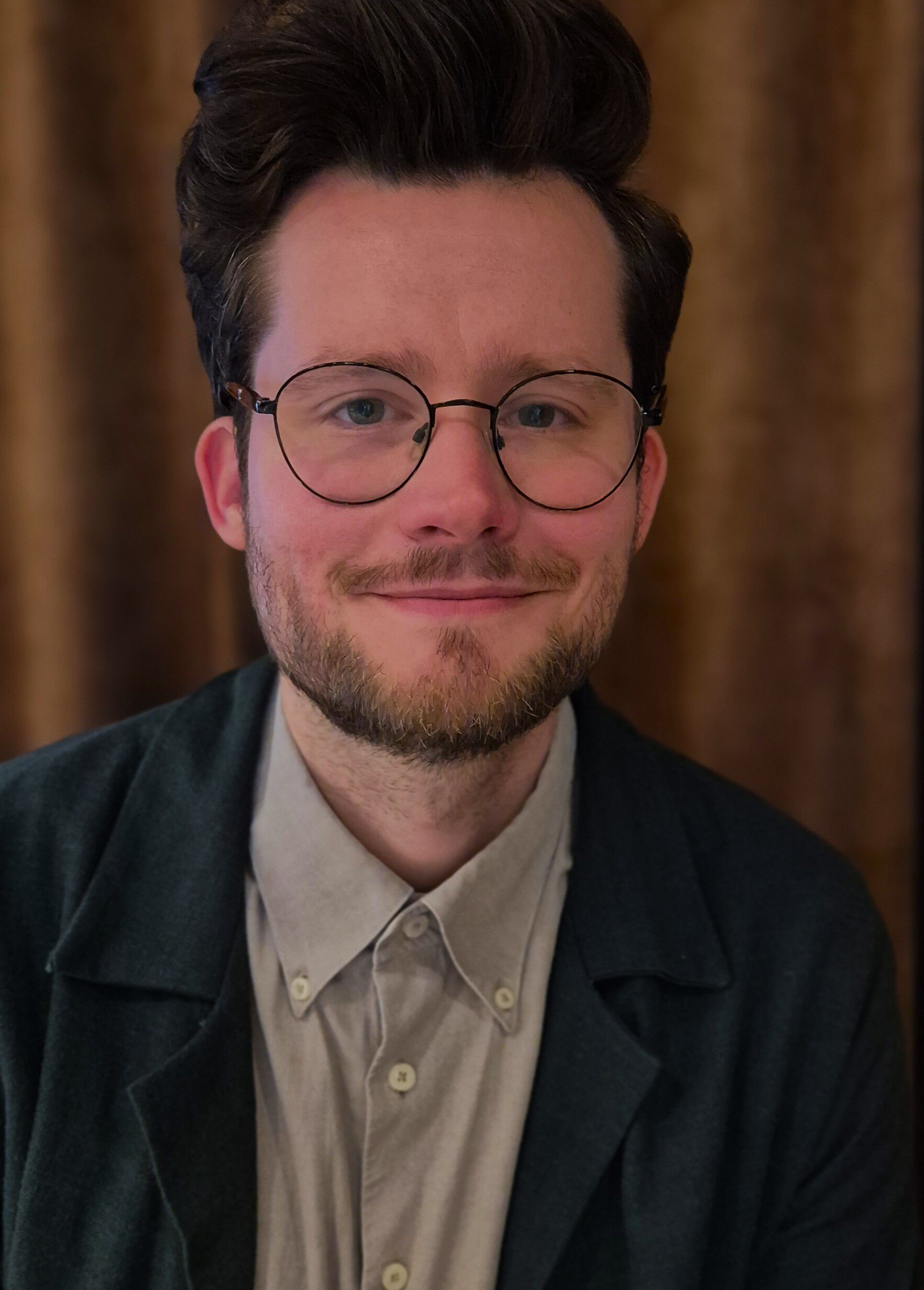
- Trial lecture starts at 10.00 am
- Public defence starts at 12 noon
Title of trial lecture:
Will be made public 10 working days before the doctoral trials
Discuss the role and contribution of the artist-researcher in a cultural rememberance context. Provide examples of different praxis and approaches, reflect critically over these in relation til the project "Minnekommisjonen"
Disputation chair: Dean Marit Wergeland
Assessment committee:
- Committee Chair: Tormod Wallem Anundsen, Associate Professor, UiA
- 1st Opponent: Ida Krøgholt, Associate Professor, Aarhus University
- 2nd Opponent: Ingeborg Hjorth, Associate Conservator, Falstad Centre
Supervisors in the doctoral work:
- Main supervisor: Siemke Böhnisch, Professor at Department of Visual Art and Drama, UiA
- Jeppe Kristensen, Professor at Department of Visual Art and Drama, UiA
- Thomas V. H Hagen, Head of Department, Arkivet
Summary of thesis
This PhD dissertation is presented in a combined artistic-scientific format and consists of the exhibition The Memory Commission, which was open to the public from May 8, 2023, to October 15, 2024, at ARKIVET Peace and Human Rights Center, and the monograph The Memory Commission: Agonism as value, practice, and process in an artistic intervention at a Norwegian WWII memorial site.
In this project, I have explored how an artistic intervention at a Norwegian World War II memorial site can contribute to agonistic thinking within memory practice and theory. The project’s starting point was the idea of an experimental artistic investigation into the theory of agonistic memory, as formulated by Anna Cento Bull and Hans Lauge Hansen (Bull & Hansen, 2016). The concept of agonism, in this context, refers to Chantal Mouffe’s political theory, which views non-violent conflict as valuable and necessary within the political sphere (Mouffe, 2013). Agonistic memory is an adoption of agonistic thinking within the field of memory studies, aiming to capture the complexity of past conflicts by creating space for multiperspectivism, open-ended dialogue, and a re-politicization of the past to counteract far-right antagonistic memories (Bull & Hansen, 2016, p. 400).
Based on the theory of agonistic memory, I have conducted an artistic-scientific research project that has resulted in several contributions to both memory- and artistic practice and theory. A significant part of this contribution lies in the dissertation’s artistic component, the exhibition The Memory Commission, which is documented in Research Catalogue. The exhibition was based on a series of workshops with participant groups consisting of lay people within the field of history. Their task was to act as decisionmakers at ARKIVET, and to decide which story from the second world war in Norway was most important to tell today.
Much of the analytical work has been framed by Janek Szatkowski’s theory of dramaturgy and his model for analyzing poietics. I have experimented with different ways of applying Szatkowski’s concepts and models and propose an alternative use of his «poietic hierarchy», based on my interpretation of the dynamic between values and artistic practice. I refer to this model as «poietic categories».
Through the exhibition The Memory Commission and this monograph, I explore how an artistic investigation can contribute to agonistic thinking within memory practice and theory in the form of, among other things, a critique of epistocracy. I examine how the project can contribute to the democratization of Norwegian memorial sites, and I unfold an understanding of agonistic thinking as fundamentally ambivalent.
What to do as an online audience member
The disputation is open to the public. To follow the trial lecture and the public defence online, register on Zoom.
https://uiano.zoom.us/j/67416182838?pwd=uVsMkJrI5IpBMvJAZZURBfLWN5S9Ev.1
We ask online audience members to join no earlier than 10 minutes in advance. After these times, you can leave and rejoin the meeting at any time.
Opponent ex auditorio:
Deadline for the public to pose questions is during the break between the two opponents. Questions ex auditorio can be submitted to disputation chair, Dean Marit Wergeland, marit.wergeland@uia.no