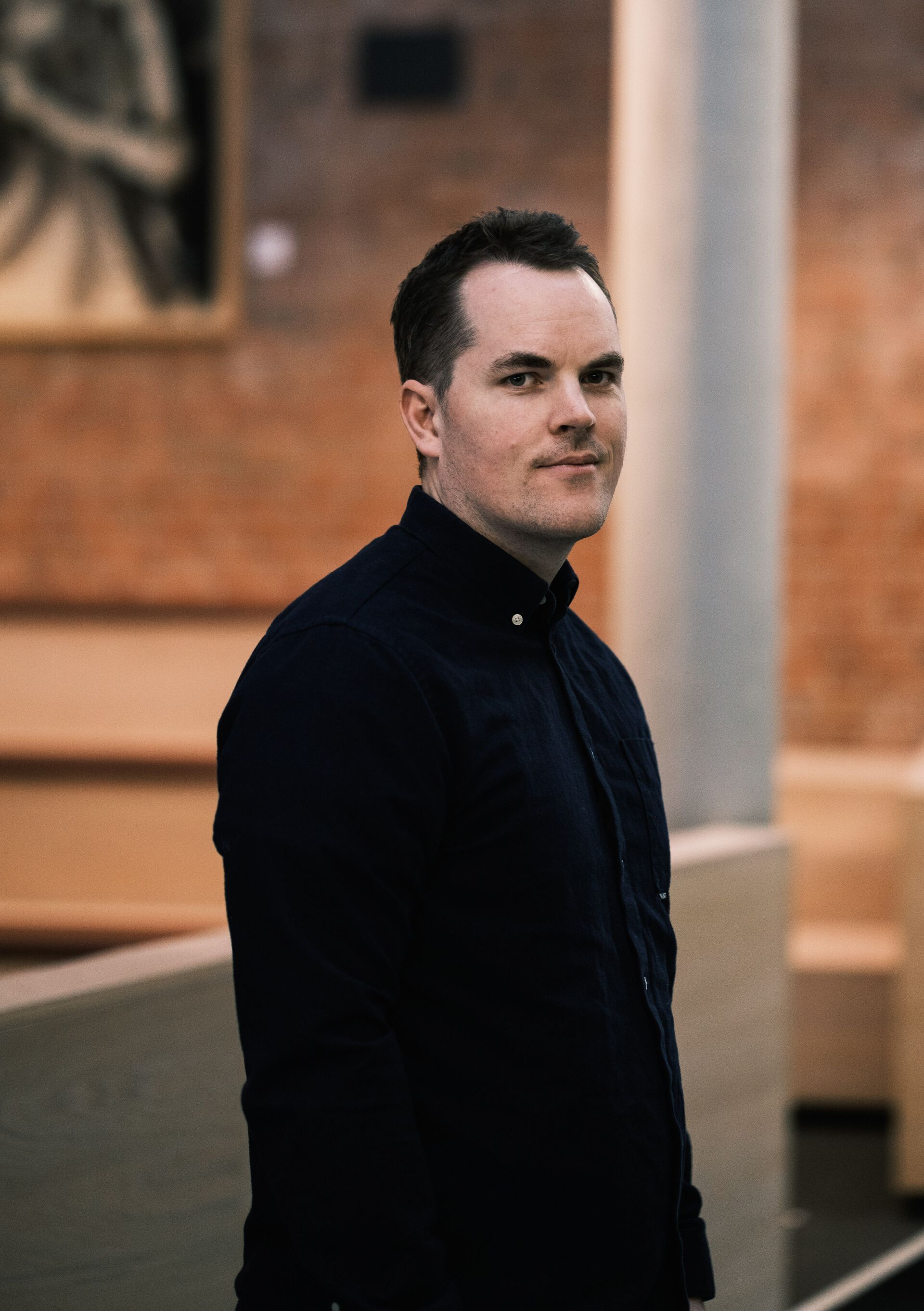
- Trial lecture starts at 10am
- Public defence starts at 12 noon
Title of trial lecture: Hauntological practices in the DAW: A practical and theoretical demonstration of strategies for creative decision making.
Read the thesis in NVA here: https://hdl.handle.net/11250/5324318
Disputation chair: Dean Marit Wergeland
Assessment committee:
- Per Elias Drabløs, Professor, University of Agder (internal and Chair of the Committee)
- Opponent Katherine Williams, Research Fellow, Univerisity of Huddersfield, UK
- Opponent Michael D'Errico, Associate Professor, Albright College, USA
Supervisors in the doctoral work:
- Supervisor Professor Emeritus Stan Hawkins
- Supervisor Professor Eirik Askerøi
Summary of thesis
How do self-producing artists determine what a song should become when the entire creative process unfolds within the computer? Which values and ideals inform their choices as voice, technology, and identity intersect in the project studio? These questions lie at the heart of Andreas Waaler Røshol’s doctoral dissertation, which investigates music production within the digital audio workstation (DAW) environment.
Grounded in his artistic practice as producer, songwriter, vocalist, and educator, Røshol combines creative inquiry with theoretical reflection. The DAW is treated as a hybrid site where technical, musical, social, and cultural forces continuously interact. Through production timelines and close analyses of electronic popular music, he articulates an axiology, a value system, of contemporary electronic music production.
The study unfolds through three key perspectives: hauntological music-making, in which “digital ghosts” from previous recordings and projects shape new creative choices; overproduction, examining the tension between vulnerability and control as the self is performed in sound; and poetic faith, exploring how sound design and lyrics construct a distinct musical world for the listener.
Røshol demonstrates that decision-making in the DAW is never purely technical. Every edit, effect, and structural change represents an aesthetic and personal negotiation what the music signifies, how much of the self it reveals, and how time, memory, and cultural expectation inform the process. The dissertation develops a vocabulary for discussing self-authentication, ambiguity, and listener experience in electronic popular music, offering a practice-based contribution to popular music studies, software studies, and the musicology of record production.
What to do as an online audience member
The disputation is open to the public. To follow the trial lecture and the public defence online, register on Zoom.
https://uiano.zoom.us/j/69758203288?pwd=JfxXEQRoNZ3vORzm7m1j5TS3CfsbYb.1
We ask online audience members to join no earlier than 10 minutes in advance. After these times, you can leave and rejoin the meeting at any time.
Opponent ex auditorio:
Deadline for the public to pose questions is during the break between the two opponents.
Questions ex auditorio can be submitted to disputation chair Dean Marit Wergeland marit.wergeland@uia.no .