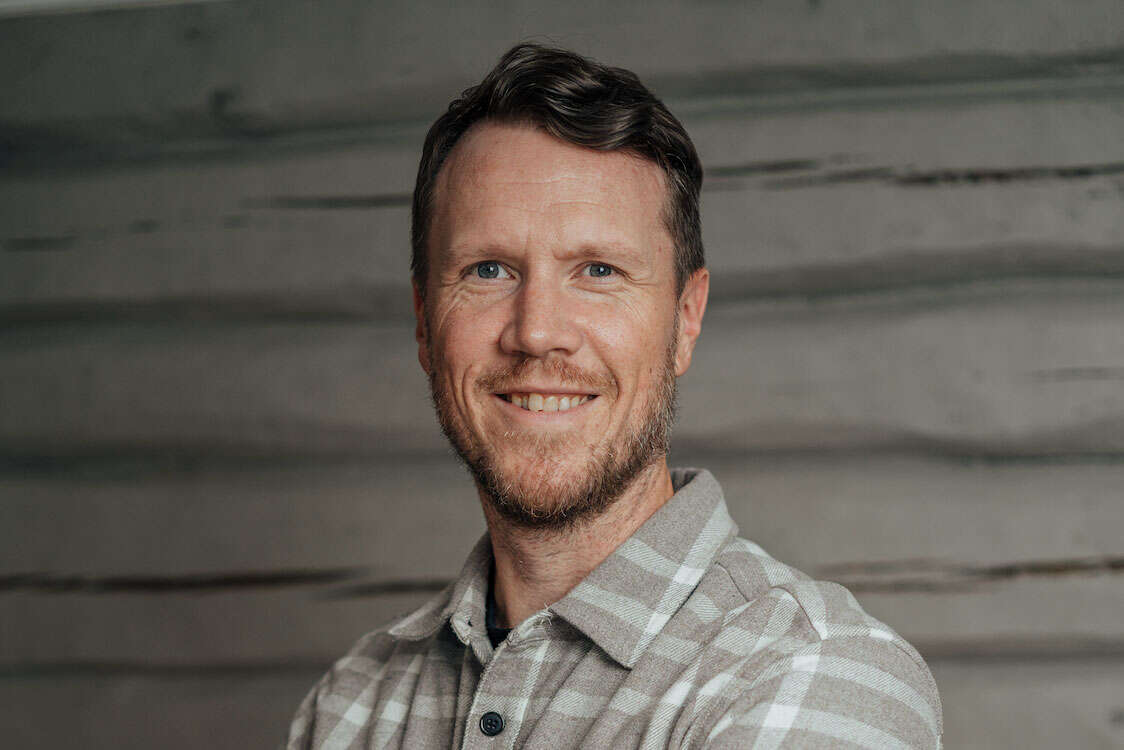
Stian Borg-Stoveland has followed the PhD Programme at the Faculty of Engineering and Science, with Specialization in Natural Sciences, Scientific Field Coastal Ecology (Business PhD).
- Trial lecture starts at 10:30
- Public defence starts at 12:30
Title of trial lecture: "Microalgae and cyanobacteria in multitrophic aquacultures - challenges and possibilities"
Disputation chair: Thomas Gjesteland, Department for Natural Sciences
Assessment committee:
- First opponent: Professor Angela Wulff, University of Gothenburg, Sweden
- Second opponent: Professor Ingrid Bakke , Norwegian University of Science and Technology
- Chair of Assessment Committee: Associate Professor Audun Slettan, University of Agder
Supervisors in the doctoral work:
- Main supervisor: Professor Tove M. Gabrielsen, University of Agder
- Co-supervisors: Associate Professor Kristian Spilling, University of Agder and Vukasin Draganovic, EcoFishCircle AS/Gas2Feed AS, Norway
Summary of thesis
Closing the Loop in Salmon Farming
Norway is one of the world's largest producers of Atlantic salmon, and much of this production is moving indoors, into so-called land-based fish farms where water is continuously cleaned and recycled. These modern facilities, called recirculating aquaculture systems or RAS, give producers unprecedented control over the rearing environment. However, RAS systems also produce large volumes of nutrient-rich effluent, which is water loaded with nitrogen and phosphorus that, if discharged untreated, can harm coastal ecosystems.
This doctoral work asks a deceptively simple question: what if that effluent could be put to use instead of being a potential problem?
The answer explored here involves microscopic algae. Working with a novel type of modular RAS (M-RAS) designed for grow-out Atlantic salmon production, three marine microalgal species were cultivated in the RAS effluent. The results showed that the algae could thrive in this nutrient-rich environment, absorbing nitrogen and phosphorus while simultaneously building biomass. In turn, this biomass holds potential as a sustainable ingredient in fish feed, cosmetics, or other high-value products.
But the system is not only about algae. Fish farms are home to billions of bacteria, and understanding who these bacteria are, and how their communities change over the course of a salmon production cycle, is fundamental to both fish health and water quality. This thesis provides the first detailed mapping of bacterial community dynamics in a large-scale M-RAS throughout an entire grow-out batch, revealing predictable patterns of succession as well as disturbances possibly linked to operational events.
Together, the findings lay a scientific foundation for integrating microalgal cultivation with effluent management in land-based salmon production, a step toward a more circular aquaculture where waste becomes resource, and where microbial life is understood rather than ignored.
What to do as an online audience member
The disputation is open to the public. To follow the trial lecture and the public defence online, register on Zoom.
We ask online audience members to join no earlier than 10 minutes in advance. After these times, you can leave and rejoin the meeting at any time.
Opponent ex auditorio:
Deadline for the public to pose questions is during the break between the two opponents. Questions ex auditorio can be submitted to disputation chair Thomas Gjesteland.
Contact person

- victoria.belous@uia.no
- Phone
- +47 38 14 23 46