
Inspired by last year’s successful study trip to Scotland (which you can read about here), the Centre for e-health, led by Dean Anders Johan W. Andersen from the Faculty of Health and Sport Sciences, wanted to invite members of the centre's advisory board, as well as other relevant stakeholders, to a new study trip at the end of September. This year’s group consisted of 14 participants, including representatives from municipalities, hospital, the Directorate of Health, the Norwegian Centre for E-health Research, and the University of Agder. A truly interdisciplinary group, which is a hallmark of the Centre for e-health.
A varied programme with a focus on innovation
In close collaboration with representatives from the Scottish health authorities, we had put together a diverse programme in advance, including visits to several leading institutions in both Edinburgh and Glasgow. The reason why it is particularly interesting to visit Scotland is that the country is quite comparable to Norway. Both countries have roughly the same population, a similar healthcare model, and both are strongly committed to the digitalisation of healthcare services. Both countries also face similar geographical challenges when it comes to healthcare access in rural areas, and both have embraced health technology.
The first stop on the programme was the National Robotarium, a leading innovation centre in robotics and artificial intelligence, developed in collaboration with the University of Edinburgh. The centre focuses on data-driven innovation and collaboration between academia and industry, with an emphasis on quickly transferring groundbreaking research from the lab to the market. It was exciting to be given a tour and to see the various robots and prototypes being researched, as well as the potential future applications for these in the healthcare sector.
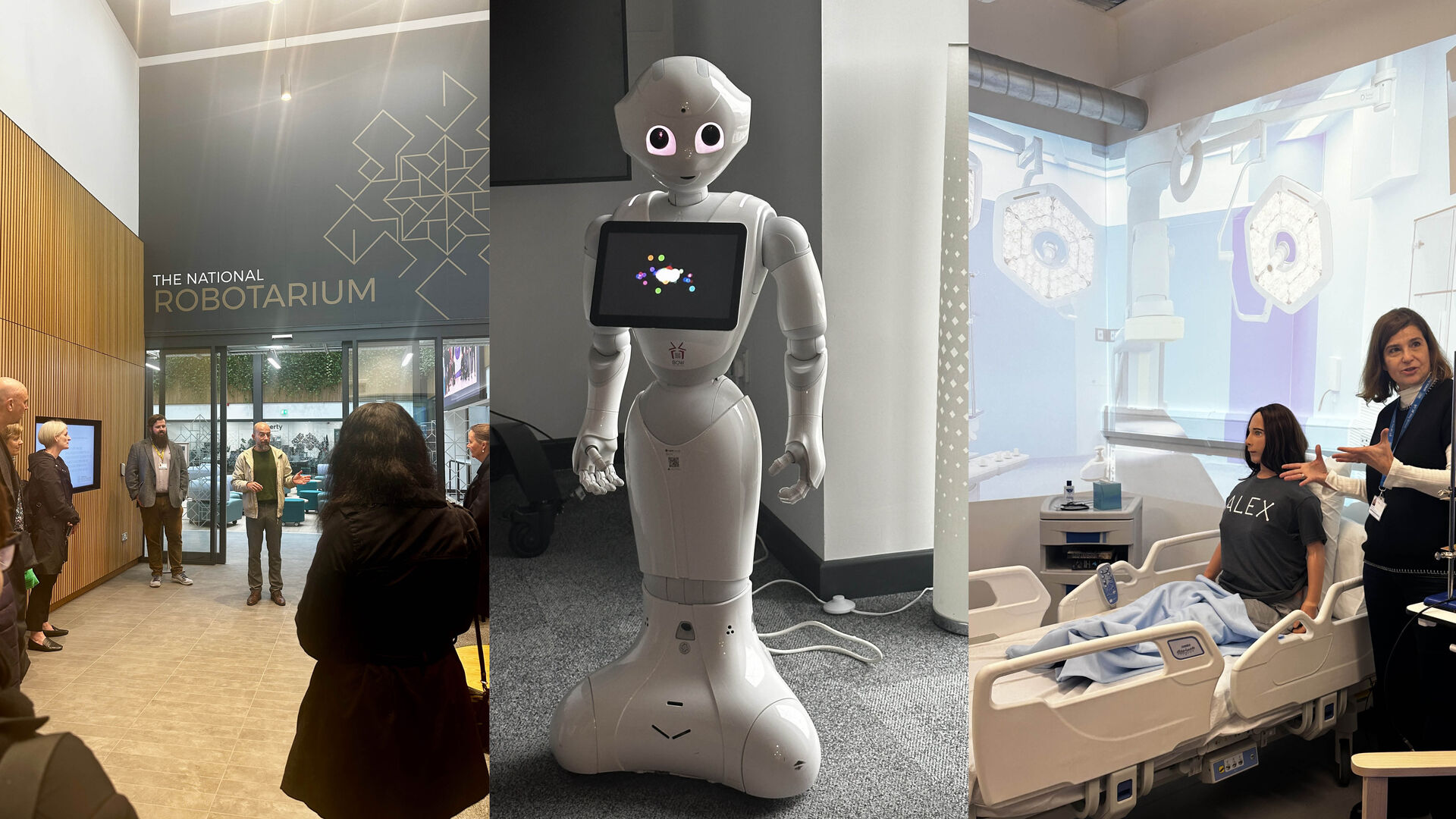
Photo: Elisabeth Giil
The next stop on the programme was the Edinburgh Futures Institute (EFI), known for its innovative approach to future challenges. Once again, interdisciplinary collaboration is the cornerstone of developing solutions, and EFI focuses on making innovation accessible to everyone. This is also reflected in the prestigious building they are housed in, which was formerly the "Old Royal Infirmary". After seven years of renovation, they opened their doors this summer and now offer state-of-the-art teaching facilities, spaces for collaboration with industry partners, incubation areas for businesses, innovation and prototyping labs, a public piazza, and a café—open to residents, industry, students, and staff at the University of Edinburgh.
EFI has a number of exciting collaborative projects and educational programmes. Among them, we were introduced to a master's programme in "Planetary Health", where students learn to understand and design solutions for global crises at the intersection of future human health and the wellbeing of our planet. We also gained insight into The Scottish Prevention Hub, a national partnership between EFI, Police Scotland, and Public Health Scotland. This initiative, focused on prevention and data-driven approaches, aims to break down silos in public service delivery and develop more sustainable and equitable solutions for all citizens of Scotland. With a declining life expectancy and increasing health disparities, a collaborative approach is crucial, as no single sector can manage the complex range of challenges impacting health and quality of life.
EFI inspired us by demonstrating how interdisciplinary collaboration and innovation can be implemented at all levels, from academia to public services and industry. This provided new perspectives on how we in Norway can strengthen cross-sector collaboration to solve complex health challenges.
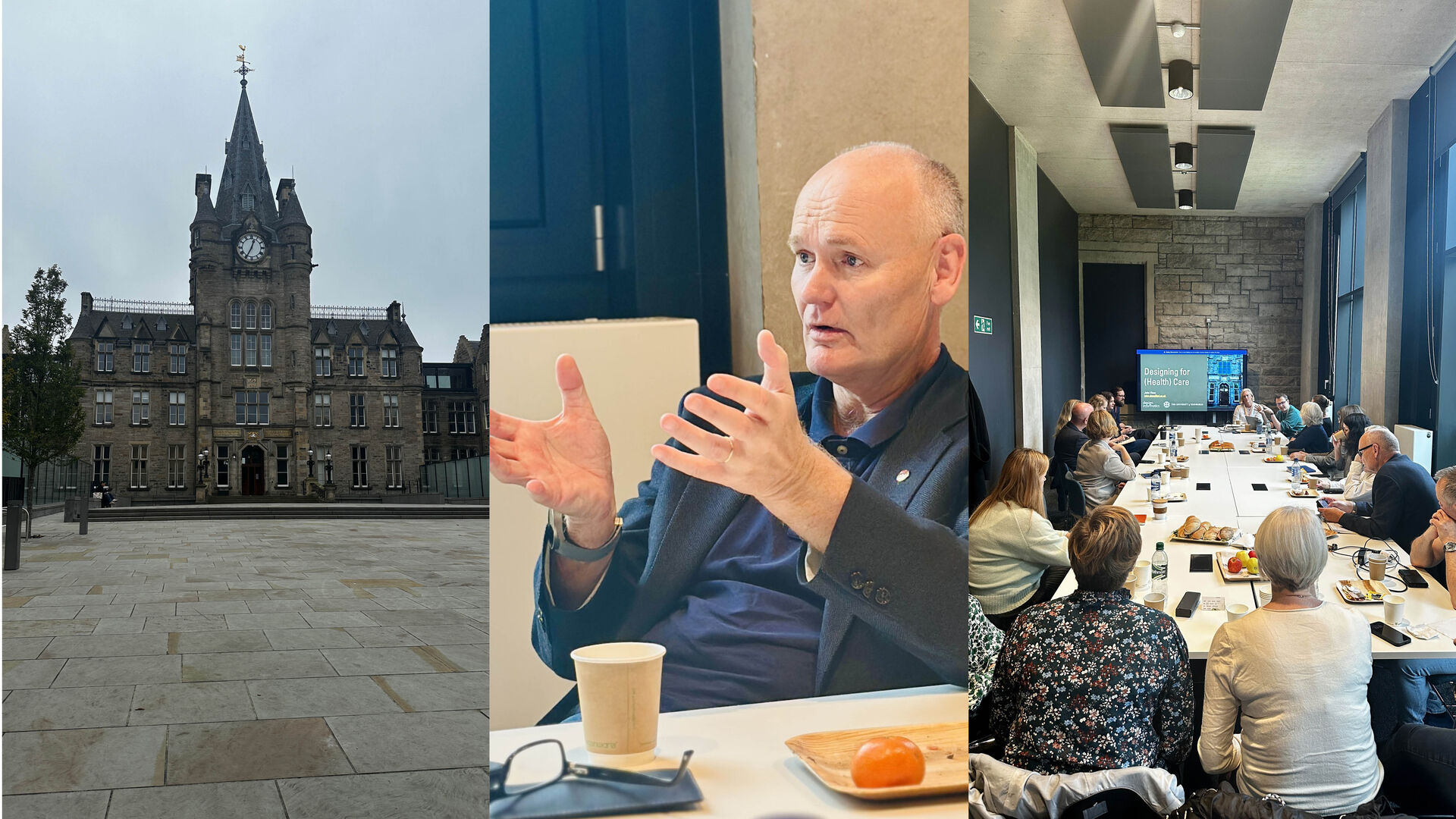
Photo: Elisabeth Giil.
The group also visited Queen Elizabeth University Hospital in Glasgow, where we met representatives from the West of Scotland Innovation Hub and the Digital Health and Care Innovation Centre (DHI). Both of these play a central role in promoting health innovation in Scotland, offering funding, networking opportunities, and expertise to support entrepreneurs and researchers in developing innovative health projects.
Here, we were also presented with a number of exciting ongoing projects, and there was a discussion about both the similarities and differences between the healthcare systems in Norway and Scotland. The Directorate of Health expressed particular admiration, and a bit of envy, for Scotland's fully integrated electronic patient record system, which supports the treatment of diabetes patients at a national level.
It was very useful to gain insight into both innovation and the implementation of more established technology in Scotland. The focus was exciting and broad - from the more abstract and innovative (e.g., at the Edinburgh Futures Institute) to the very concrete in users' everyday lives (Blantyre Life).
- Bjørnar Alexander Andreassen, Directorate of Health, Department of Health Technology.
Innovation in Elderly Care: Blantyre Life Hub
Blantyre Life Hub, which opened its doors in 2023, represents a great example of innovation in elderly care. Here, the principle of "home first" is central, focusing on providing more people with the opportunity to live as independently as possible in their own homes.
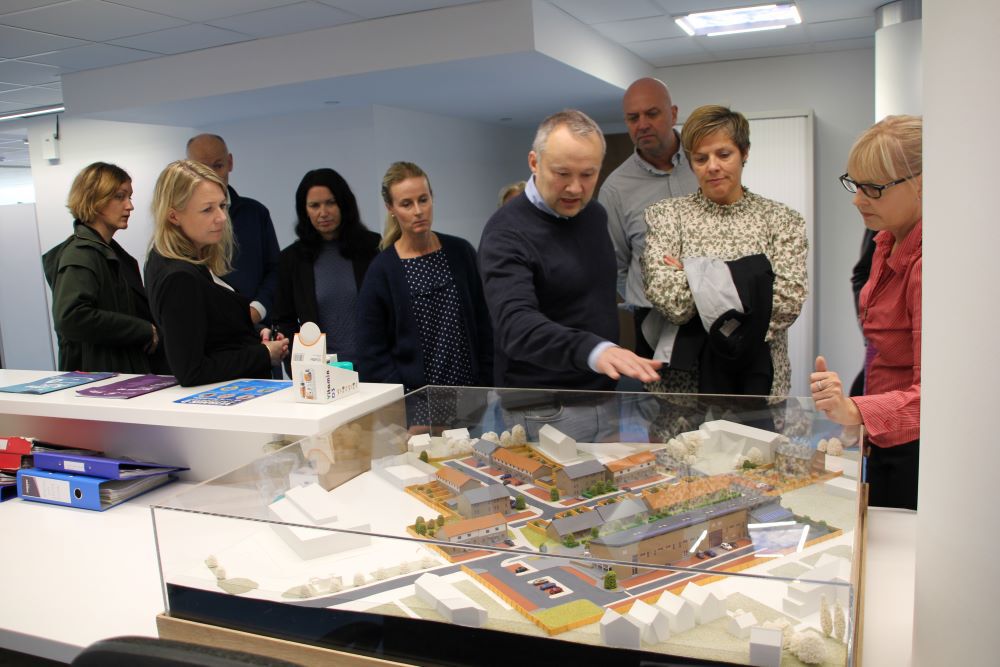
The campus combines 20 short-stay beds and 20 technology-enabled housing units, equipped with state-of-the-art technology that supports independent living. Some members of the group had the opportunity to meet Ann, one of the residents, who enthusiastically shared how moving here has given her a new sense of independence and the ability to manage more things on her own.
Ann also praised the café in the main building, which is open to residents, their families, and the local community. It serves as a social gathering point in everyday life. Next to the café, there is a TEC-Zone, where training and demonstrations of various aids and technological solutions that can be used at home are provided.
Blantyre Life Hub gave us valuable insight into how technology can be an enabler of independence in elderly care. This technology-based approach could serve as a model for how Norwegian municipalities can integrate technological solutions into their health and care services.
It was valuable to visit the care centre and hear and see how they work on training users in the use of technology, with a focus on how users can be taught to manage as independently as possible at home. This is a mindset that will be important to carry forward to municipal health services in Norway.
Silje Bjerkås, Grimstad Municipality / USHT Agder East
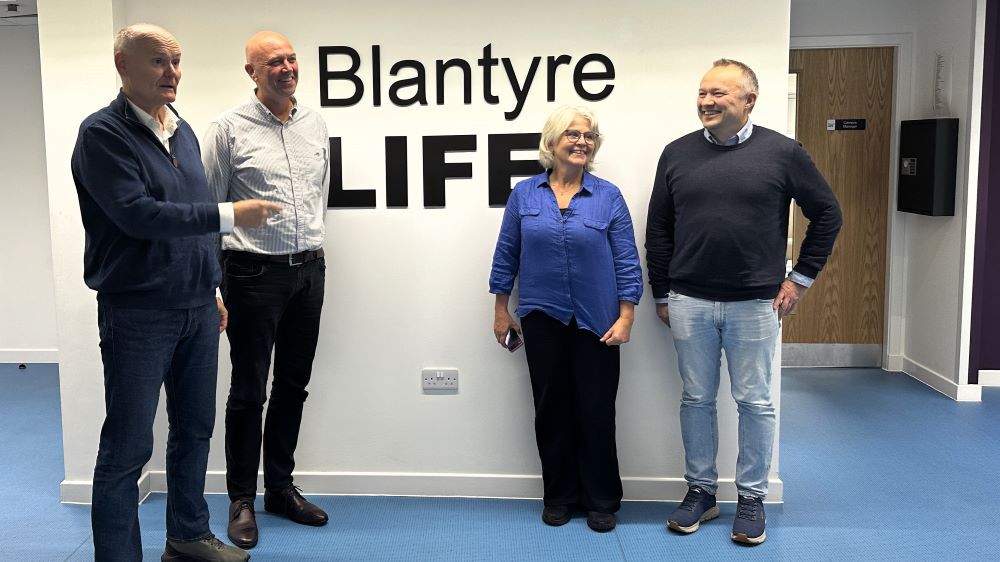
Networking and New Inspiration
Networking was an important part of the trip, both with Scottish partners and within the group. Several participants expressed that they had an educational, interesting, and, above all, enjoyable journey. New connections were made across the board, and there was a sense that there is much shared learning and exchange of common ambitions in the field of digitalisation.
It has been wonderful to be part of a diverse group representing various professional fields on this trip; it has provided different perspectives and led to great discussions at the places we visited. Additionally, the journey has given several participants new points of contact that are relevant to follow up on in the future.
- Elin Thygesen, Academic leader at Centre for e-health, UiA
Dean Anders Johan W. Andersen was impressed by the willingness to share knowledge and experiences within the Norwegian delegation, and especially from our Scottish hosts and partners. In this sense, the trip was a study tour under the vision of co-creation for future knowledge, and it nourished continued engagement and collaboration around the development of welfare technology solutions to create high-quality health and care services.
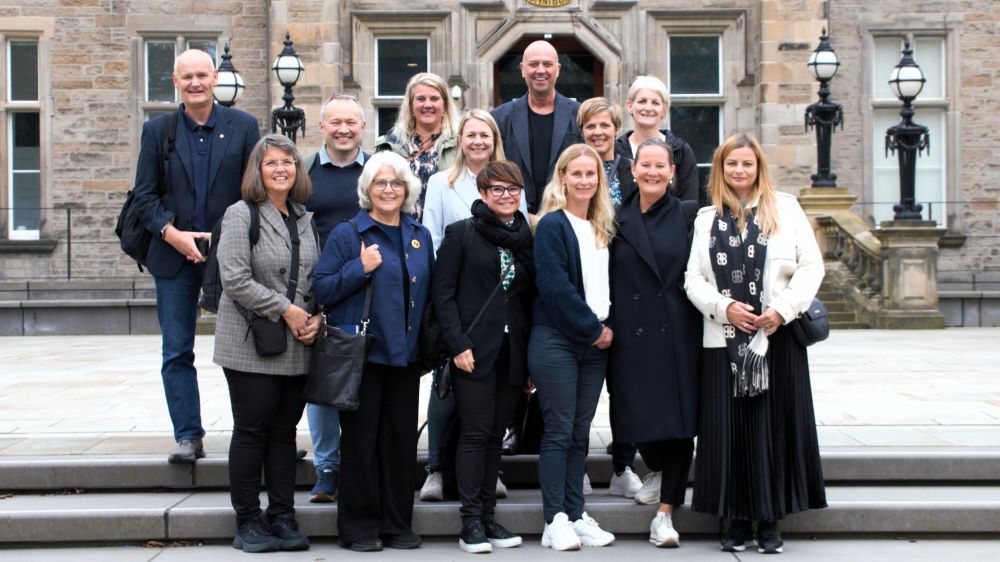
Photo: Elisabeth Giil.