.png)
Join leading experts, innovators, researchers, and stakeholders for inspiring keynote presentations, engaging panel discussions, and valuable networking opportunities. We are also proud to celebrate the pre-launch of the DUALSAVE-FGS App, an innovative digital tool designed to strengthen training, awareness, and diagnosis of FGS.
Program day 1 - 15th of June
Please note that the program is subject to change
| Governance, Policy Forum and Pre-Launch | ||
|---|---|---|
| Time | Session | Responsible |
| 09.30 - 10.00 | Registration and welcome coffee | |
| 10.00 - 10.10 | Opening remarks | Professor Santiago G. Martinez, University of Agder (UiA) |
| 10.15 - 10.40 | Current Status Healthcare Professional on FGS | Dr. Eyrun Kjetland, Oslo University Hospital |
| 10.40 - 10.55 | WHO’s role in universal training for FGS diagnosis | Dr. Pamela Sabina Mbabazi, World Health Organization |
| 10.55 - 12.00 | Pre-launch DUALSAVE-FGS App | University of Agder, IT Division |
| 12.00 - 13.30 | Lunch break | |
| 13.30 - 15.00 | Co-design workshop: Reflections and feedback on DUALSAVE-FGS App | University of Agder, Division of Research and Innovation (CoLAB) |
| 15.00 - 15.15 | Short break | |
| 15.15 - 15.45 | Developments in Cervical Cancer Screening | Dr. Mark Schiffman, National Institutes of Health, USA |
| 15.45 - 16.00 | Practical Experiences in Infection Control and Eradication Efforts | Professor Xiao-Nong Zhou, Director of WHO Collaborative Centre for Tropical Diseases |
| 16.00 - 16.15 | Short break | |
| 16.15 - 17.00 | Panel discussion - Global Policy & Governance for FGS, Commitments | Teresa Norris, President HPV Global Action |
| 17.00 | Program finished day 1 | |
| 19.00 | Stakeholder dinner at Apotekergården in Grimstad city centre | By invitation only |
Program day 2 - 16th of June
Please note that the program is subject to change
| FGS Recognition and Scaling | ||
|---|---|---|
| Time | Session | Responsible |
| 09.00 - 09.30 | Welcome coffee | |
| 09.30 - 10.15 | Cervical Cancer Screening in Norway, immigrants and travellers | Dr. Amelie Tropé, Norwegian Institute of Public Health (NIPH) |
| 10.15 - 11.00 | Accessibility and sustainability when providing health services in contexts with constrained access to care | Dr. Ida McFadzean, Southern Norwegian Hospital (SSHF) |
| 11.00 - 11.15 | Short break | |
| 11.15 - 12.00 | Schistosomiasis in Norway – a clinical perspective | Dr. Kristine Mørch, University of Bergen, Norway |
| 12.00 - 13.30 | Lunch & press conference | |
| 13.30 - 14.00 | Machine learning for Clinical Image Analysis | Video extract from Dr. Mark Schiffman, National Institutes of Health, USA |
| 14.00 - 14.30 | Female Genital Schistosomiasis (FGS) in Training from a Nursing Perspective | Sihawu Bongekile Mphalala, BRIGHT Academy (South Africa) |
| 14.30 - 14.45 | Short break | |
| 14.45 - 16.00 | Roadmap Session, commitments – Scaling & Partnerships | Teresa Norris, President HPV Global Action |
| 16.00 - 16.30 | Closing remarks & way ahead | Santiago Gil Martinez & participants |
Keynote speakers:
Santiago Gil Martinez
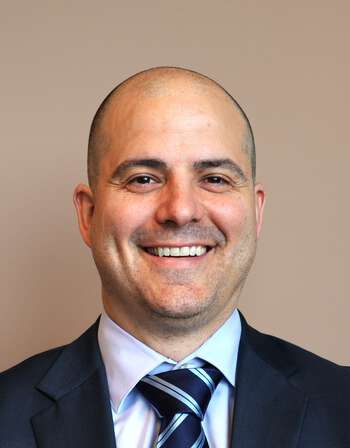
Santiago Gil Martinez is a Professor in e-health at the University of Agder and a member of the Centre for e-health. His research focuses on human-centred design, human-computer interaction, and digital health innovation, with a particular emphasis on inclusion of underserved and low-technology populations. He has extensive experience from international interdisciplinary projects across Europe, Africa, and Asia, applying co-design and digital health approaches to address global health challenges. His work combines innovation, education, and research to advance accessible and sustainable healthcare solutions
Eyrun F. Kjetland
.jpg)
Kjetland is employed by the Norwegian Centre for Imported and Tropical Diseases, Oslo University Hospital and is an Honorary Senior Lecturer with University of KwaZulu-Natal. She has worked in the field of genital schistosomiasis from 1994, starting in Malawi. Kjetland has published more than 45 articles on genital schistosomiasis and is currently tutoring five PhD students. She is a medical doctor, a researcher, has been a lecturer in infectious diseases for 5th and 3rd year medical students, and also worked as a bus driver when she was a medical student. The last years she has been a part-time clinician and part-time researcher.
Ameli Tropé
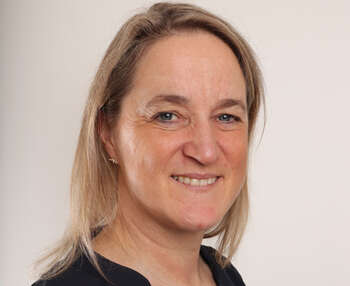
Ameli Tropé, MD, PhD, is a gynaecologist, researcher, and Director of the Norwegian Cervical Cancer Screening Programme (CervicalScreen Norway) at the Norwegian Institute of Public Health.
Dr. Tropé has clinical and research experience in cervical cancer prevention, with a PhD focused on human papillomavirus (HPV) and cervical neoplasia. Her work focuses on improving screening strategies, increasing participation, and ensuring high quality across the entire screening pathway—from invitation and testing to diagnosis and follow-up.
The programme has implemented HPV-based screening in Norway and is now evolving to include HPV self-sampling and extended genotyping, with ongoing efforts to refine more personalized, risk-based screening approaches.
She has a strong commitment to education and quality assurance in colposcopy and is a certified colposcopist. Dr. Tropé leads a European Joint Action project aimed at strengthening training and quality standards in colposcopy across Europe, as well as in Norway. She also organizes and delivers mandatory colposcopy training courses required for specialization in gynaecology in Norway.
In her role as Director, she collaborates closely with clinical, laboratory, and public health stakeholders and is actively engaged in international research and policy work related to cervical cancer prevention.
Kristine Mørch
Haukeland University Hospital, Bergen

Kristine Mørch is PhD, specialist in internal medicine and infectious diseases and senior consultant at Unit for Infectious Diseases, Haukeland University Hospital, Bergen. She is also head of National Centre for Tropical Infectious Diseases at Haukeland University Hospital and assistant professor at the University of Bergen, Norway.
Ida McFadzean
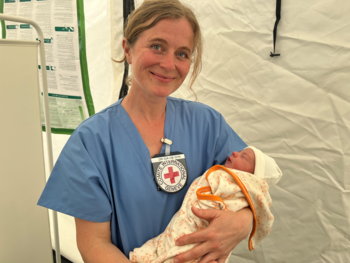
Ida McFadzean is a specialist in family medicine, obstetrics and gyneacology and works at the womens's clinic and with victims of sexual assault at Sorlandet hospital, Kristiansand Norway. She is an International delegate for the Red Cross /ICRC and has recently worked in the Red Cross/ICRC field hospital in Gaza. She has travelled extensively and has experience from humanitarian settings from different areas of the world.
Teresa Norris
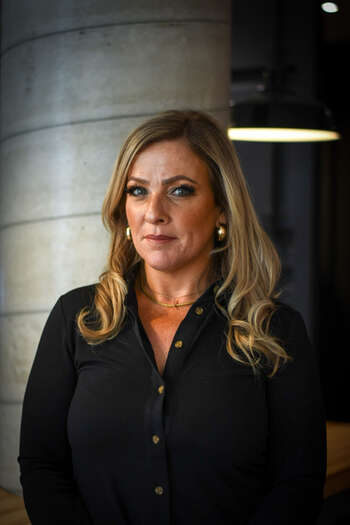
Teresa Norris is an internationally recognized researcher, advocate, and health policy leader. She is the Founder, President & CEO of HPV Global Action, a Canadian-based international charity, and the newly elected President of the Quebec Cancer Coalition. With over 25 years of experience in cancer prevention, research, and policy development, she has dedicated her career to advancing oncology outcomes through education, evidence-based interventions, and global health collaborations. As a sexual and reproductive health specialist, she has developed prevention programs and contributed to shaping health policies in gynecological cancers both nationally and internationally. Her educational initiatives alone have reached more than 100,000 students, faculty, and healthcare professionals across Canada.
Teresa also helped lead the INTEGRATION Project, a major clinical research initiative within the PAVE consortium, an AI-driven global collaboration with the National Institutes of Health, National Cancer Institute, and World Health Organization, focused on addressing the intersecting burden of cervical cancer, HIV, female genital schistosomiasis (FGS), and soil-transmitted helminth (STH) in Eswatini. Her work is grounded in advancing equitable prevention strategies through immunization, screening, education, and integrated models of care, while elevating patient voices and improving quality of life for underserved populations worldwide.
Xiao-Nong Zhou

Professor Xiao-Nong Zhou is Chief Scientist on parasitic diseases control at the Chinese Center for Disease Control and Prevention (China CDC) and Director of the WHO Collaborating Centre for Tropical Diseases in Shanghai. He is also Vice Dean of the School of Global Health at the Chinese Center for Tropical Diseases Research, Shanghai Jiao Tong University School of Medicine, and Director of the One Health Center, a collaboration between Shanghai Jiao Tong University and the University of Edinburgh.
He serves as Chairman of the Society of Global Health under the Chinese Preventive Medicine Association, Member of the National Expert Committee for Diseases Prevention and Control, Chair of the One Health Working Group of the World Federation for Public Health Associations (WFPHA), and Member of the One Health High-Level Expert Panel (OHHLEP) for the FAO/WHO/UNEP/WOAH Quadripartite. He is also founding Editor-in-Chief of Infectious Diseases of Poverty and Science in One Health, and Editor-in-Chief of the Chinese Journal for Schistosomiasis Control.
Professor Zhou is a leading international expert in tropical disease research and control, with over 40 years of experience applying One Health approaches. His work focuses on the spatial epidemiology of parasitic diseases and the development of innovative strategies for national control programs. He has contributed significantly to surveillance-response systems that have supported the elimination of parasitic diseases in China, and has long-standing collaboration with international organizations including WHO. He has published over 400 peer-reviewed papers and is a highly cited researcher since 2016.
Mark Schiffman

Mark H. Schiffman, M.D., M.P.H., is a Senior Investigator in the Clinical Genetics Branch of the National Cancer Institute’s Division of Cancer Epidemiology and Genetics at the NIH. For more than three decades, his research has focused on human papillomavirus (HPV), cervical carcinogenesis, and cervical cancer prevention. Dr. Schiffman has led and collaborated on large epidemiologic studies and clinical trials involving more than 100,000 women, helping to establish the causal role of HPV in cervical cancer and advance the use of HPV testing, vaccination, and risk-based prevention strategies. He received his M.D. from the University of Pennsylvania and his M.P.H. in epidemiology from Johns Hopkins, and has received numerous honors, including a Fulbright Scholarship, the ACS Medal of Honor, and the AACR Prevent Cancer Foundation Award.
Pamela Sabina Mbabazi
Presently, Pamela is working as a medical epidemiologist in the Department of Control of Neglected Tropical Diseases (NTDs), at the WHO headquarters in Geneva, Switzerland. Her current research interests include strengthening monitoring and evaluation for neglected tropical diseases programmes particularly in vulnerable populations with a focus on women and children, notably for female genital schistosomiasis (FGS).
She has authored several publications in peer reviewed journals, mainly related to methodologies for tracking public health gains for neglected tropical diseases and the effects of co-morbidities.
Practical information
- The summit is a hybrid event, and those who sign up to join online will receive a zoom-link prior to the event.
- The summit will be recorded.
- Free lunch, coffee, fruit and snacks are provided to those who join on-site at campus Grimstad.
- We only cover travel expenses and accomodation for invited speakers
- The meeting room N3 049 - Utsikten is located on the 3rd floor in the i4Helse-building (building on the left side of the campus main entrance). Mazemap-link.

Travel to Grimstad
Transportation
Getting to Grimstad varies by your point of arrival in Norway:
From Kristiansand Airport (Kjevik - KRS): The closest airport is roughly a 45-minute drive away. Take a taxi or the local bus 35/36 from the airport to Kristiansand, then transfer to express buses or local lines (like 100/100D) heading to Grimstad. You can use the Agder Kollektivtrafikk (AKT) Travel Planner for full routes and timetables.
From Oslo / Torp Sandefjord Airport (TRF): Express buses run regularly directly to Grimstad. Look into departures with Vy Buss, NOR-WAY Bussekspress or Flixbus.
By Train: There is no direct train station in Grimstad. The nearest major train hubs are in nearby Kristiansand or Arendal, where you can connect to a local bus to complete your journey.
By car: Read more about parking at UiA, Campus Grimstad
Hotels
Comfort Hotel Grimstad ( Strawberry) - Closest to campus (300 meters)
Home Hotel Grimstad ( Strawberry) - In the city centre of Grimstad
Contact persons:

- santiago.martinez@uia.no
- Phone
- +47 37 23 34 72

- elisabeth.giil@uia.no
- Phone
- +47 37 23 31 89